The Allegory of the Pirate Ship
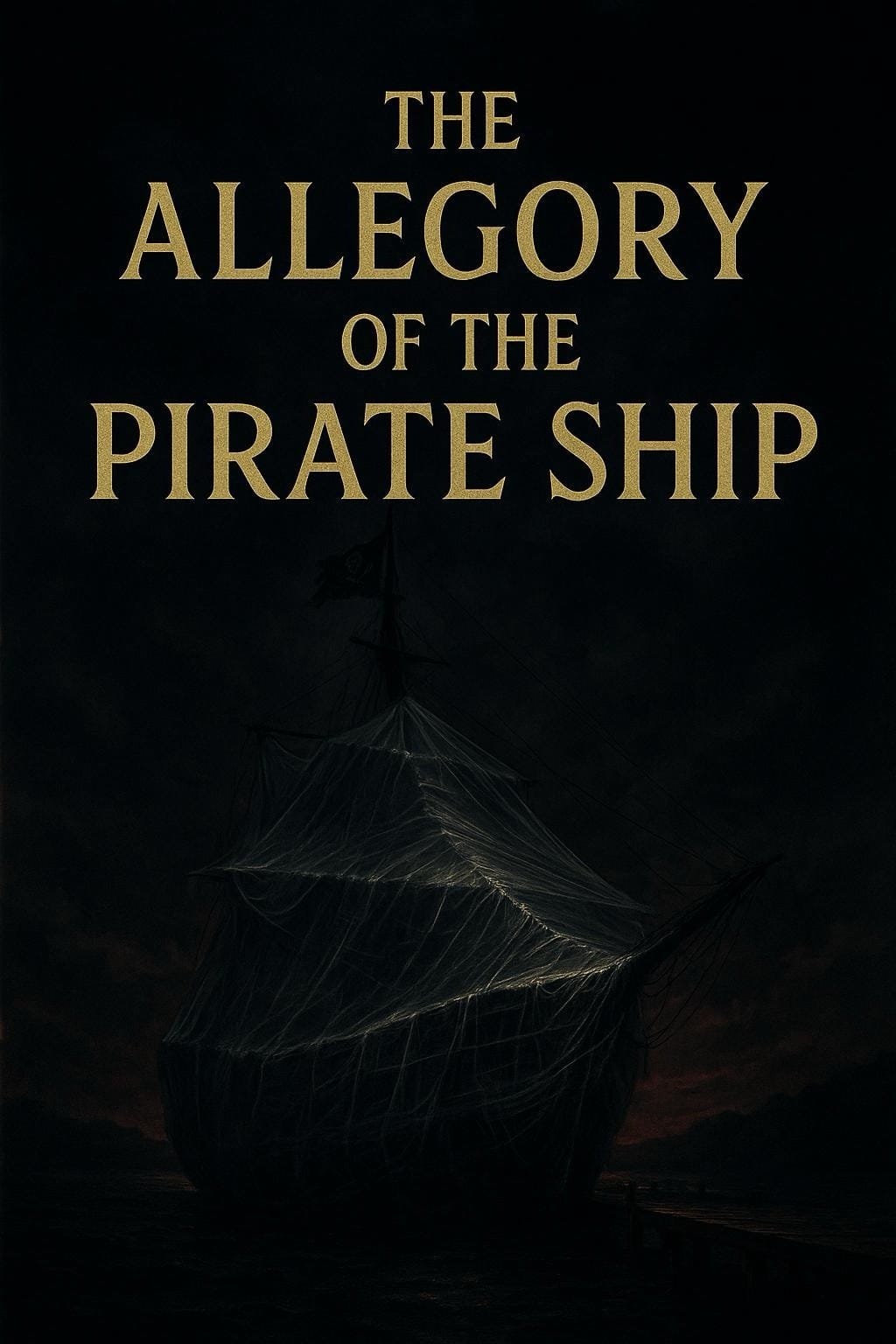
At the turn of the century, there lived a learned man named Chris, who was steeped in the classics and in history, gifted with a mind that instinctively drew lessons from the past. In time, Chris moved his family to a coastal town known as Laes. The move was simple on its face—he wished to be closer to his parents and in-laws—but there something else drawing him there. Laes was home to a legendary ship and her crew. Its very mention stirred Chris’ imagination long before he ever saw the place. Upon arriving, he learned that his father had befriended the captain of this ship, which was the most lethal ship the world had ever known. Not long after moving to his new home, Chris met the captain and he invited Chris on a private tour of the seafarer’s compound. The highlight of which, would be the docks because that was where the famed ship was moored. The ship and her men’s reputation were not confined to Laes. Its name echoed across the nation and far beyond its borders. Only the most elite men dared attempt its selection; fewer still earned a place among its crew, earning the golden seal. Chris knew of this seal, for he read the legends that told of the sun reflecting off it and nearly blinding onlookers. This was the seal that sealed their place into the legendary brotherhood forevermore. These warriors were forged in the most advanced era in human history—armed with technology, resources, and capabilities unimaginable to ancient mariners. And all of them, the select few, now worked together on this single vessel. To Chris, the potential was limitless, for history had shown him what could be achieved with far, far less. Yet, being classically trained, he also knew what time inevitably does to man-made institutions. Still, the anticipation drowned out his quiet caution. Chris and the captain stepped out of a building that opened to the docks. Upon walking out, sunlight shone fiercely from the expanse above and its reflection also blasted across the water, forcing Chris to shield his eyes as he searched excitedly for the ship—only to notice something strange. The glare wasn’t just from the waters but reflecting from elsewhere. Plastic. The Ship—the ship known around the world—was completely wrapped in plastic. Chris’ expression shifted from wonder to confusion, but the captain smiled proudly, as if showing off a prized possession. Through the thin wrapping, after looking intently, Chris saw that the ship still looked magnificent, savage even. The captain urged him closer. As Chris approached, he saw holes in the plastic, though they could not have been due to wear or accident, for they were spaced evenly and of the same exact size. Still looking intently and moving toward the ship still, movement stirred behind the plastic. The crew, the elite mariners themselves, were working within the sealed shell of plastic. The captain beckoned Chris aboard to meet them. Inside, the ship was both awe-inspiring and unsettling. The men—diverse in build, background, and skill—looked every bit as lethal and capable as legend claimed. But something was off. Their faces were flushed red and their breathing labored; far more than one would expect of someone of that caliber. And everywhere, in every corner of the ship, there were rolls of crimson string and wooden chests overflowing with paperwork, which seemed quite odd to Chris. After a few introductions, the captain stepped back onto the dock, leaving Chris with the crew. The moment the captain was gone, the men relaxed and greeted him with genuine warmth. They were smart, sharp, welcoming—warriors with spirit and humor. Through their conversations, Chris quickly realized the men fell into three groups:
1. Those who knew they were suffocating under the plastic but remained silent to avoid “rocking the boat.”
2. Those who ignored the suffocation entirely, convincing themselves all was well. That one more task in the grand scheme of things is, ultimately, inconsequential.
3. Those who saw the truth clearly, had tried to fix it, failed, and were now preparing to leave for the sake of their families. To which, one gentleman referred to the filing cabinets and uniform holes in the plastic as, “Precision applied absurdly.”
The third group did not despise the ship, but love it just as much, if not more than, those in the first two groups. And that was, in itself, the tragedy. They no longer believed they would ever again get to do the job the way it was meant to be done. Before leaving, Chris walked one more lap around the ship. With the glare of the sailors’ golden seals no longer placing him in a trance (There was some truth to the legend), he saw clearly what he’d missed before: The wood in critical parts of the ship was rotting. Moisture trapped, airflow blocked, sunlight denied. The vessel was decaying beneath its own protective shell. Stunned, Chris stepped back onto the docks and rejoined the grinning captain. He thanked him for the tour and the captain nodded and said the line Chris would never forget: “You see, son, that ship will live through history. I am but a piece of the puzzle and I did my part to preserve it and take care of the men. Not sure if your old man told you—next month, I leave for the Royal Council.”
